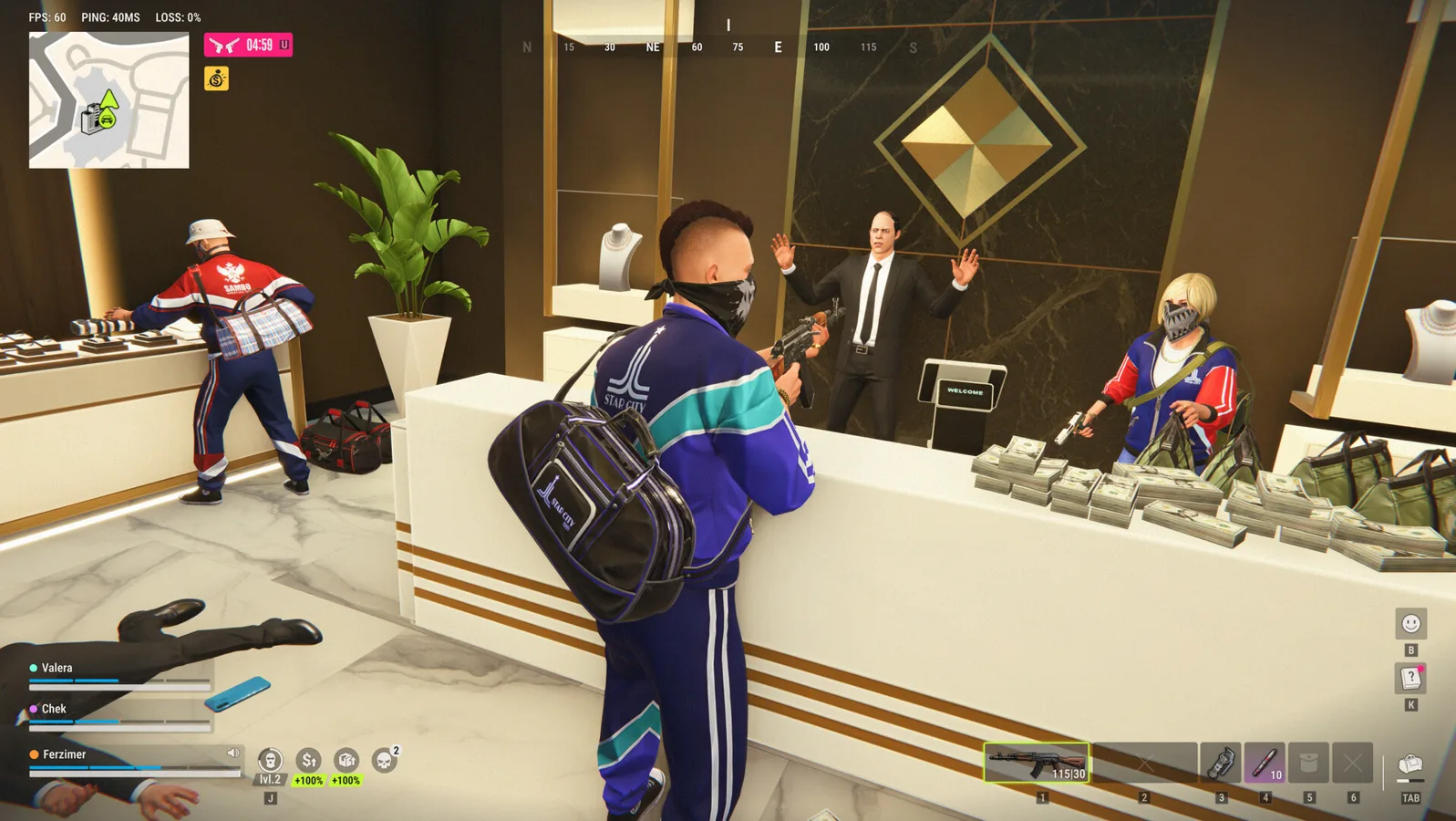
Start ROB RUN by learning the core systems at Lenny’s Motel, choosing a way to earn, and understanding what you risk when you enter Looty Bay as a Criminal. Your early objective should be a repeatable run you can afford to lose, rather than an expensive loadout you cannot replace.
This is a source-based guide to the launch rules, checked on November 5, 2026. The sequence below is our suggested learning route, not a mandatory quest chain. Mechanics link to Kefir’s official documentation; exact prices, key bindings and server reset times are left out where the sources do not establish them.
First steps
Visit Lenny at his Motel if you are unsure what to do after the introduction. The developer identifies him as the place to learn the fundamentals. After that, progression opens into several activities rather than a single required route: crime, cargo transport, base production, policing and territory competition.
For a first session, we recommend learning one earning activity before trying to juggle all of them. Look for a loop you understand: how it starts, where its reward comes from, and what could cause you to lose it. That makes your next purchase a response to a real problem, instead of a guess.
The useful first-session checklist is simple:
- Learn the core mechanics at Lenny’s Motel.
- Choose one activity to learn, rather than buying equipment for several.
- Understand the loss rules for your location and role.
- Learn how to protect earnings and establish a base.
- Check the current server’s wipe information before making long-term plans.
Source: what to do after the intro quests.
Heists
In Looty Bay, wearing a mask changes what you can do and who can attack you. It enables robberies, but also exposes you to Police and other Criminals. Leaving the city clears your Criminal status; taking the mask off is not the documented way to clear it. On your next visit, you can choose a role again.
Before a robbery, identify the building and a route out. The developer recommends scouting first and keeping staff under control during the heist to avoid an alarm. In a team, divide the work between entry, carrying the loot and covering the escape.
Our suggestion is to treat the first attempt as a test of that route. If you cannot describe where you will go with the loot, spend more time scouting before committing. This guide does not claim a particular building is the safest or most profitable: that would require a current, reproducible route comparison.
Money
For the full earning-method comparison and the selling-to-laundering sequence, read the money guide.
Earning cash and protecting cash are separate steps. To open a bank account, go to the Looty Bay Bank as a Civilian. At your base, use the Laundering Desk to move cash through the laundering process. It takes time, and the resulting protection lasts only until the next wipe. ATMs let you withdraw cash.
The practical consequence is that carrying cash, processing it and holding protected funds are different states. Do not assume a successful robbery immediately makes its proceeds safe. Likewise, protected funds are not permanent progress: the Federal Raid still resets cash.
For your first earnings, our advice is to learn the full banking and laundering process before judging a money-making method by its headline payout. A large haul that you lose on the next trip is less useful than a smaller loop you can complete reliably. No fixed laundering time or conversion rate is asserted here.
Source: banking and laundering.
Police
The Police and survival guide covers badge changes, fresh-server equipment and the bank-money requirement for bribes.
To become a cop, enlist at the Looty Bay Police Station when a slot is available. The department provides starting equipment and a patrol vehicle. Badge progression opens access to better equipment, while policing activities provide an income. A backup call can temporarily change the equipment and pay available to responding players.
As a Criminal, surrender is a separate outcome from dying. Surrendering means losing what is in your bag while retaining your equipped gear. If an officer accepts a bribe, you keep your loot. Bribe acceptance is conditional; do not plan a run as though it is guaranteed.
The comparison below matters when deciding whether to risk another fight:
| Situation | Documented loss rule |
|---|---|
| Criminal surrenders to Police | Bag contents are confiscated; equipped gear is retained. |
| Criminal dies in Looty Bay | Inventory is lost. |
| Death in the desert | All loot is lost. |
| Civilian dies in the city | Bag contents and equipped gear are retained. |
| Police Officer dies | Department-issued gear is lost; personal items and equipment are retained. |
These rules depend on role and location. The Civilian city rule is not protection for a Criminal or for someone travelling in the desert. Our recommendation is to learn which rule currently applies before carrying gear you cannot comfortably replace.
Sources: joining the Police, surrender, and death losses.
Base
For property tiers, construction, fuses and raid access, use the base guide.
Your first base requires a plot in a settlement that already has an owner. Find an available plot and check the sign beside it. An empty-looking area is not enough: settlement ownership is a prerequisite.
The launch-day First Changes & Server Schedule announcement changes an important early-game requirement: Tier 1 settlements and land rentals now use documents instead of cash. The help article still describes paying rent and identifies Black Market documents for level 2 and level 3 plots. Use the newer announcement for the Tier 1 payment change, and check the current plot sign for the exact requirement.
If a plot cannot be rented, check settlement ownership and document requirements before assuming the interaction is broken. This guide does not give a universal rent price or document cost: the launch announcement does not establish those amounts.
We suggest checking access and your planned earning loop before choosing a location. A base decision should support what you are actually doing during this cycle. There is no verified “best base spot” in this guide, and owning or renting land should not be mistaken for permanent ownership across wipes.
Sources: renting your first plot and the newer First Changes & Server Schedule announcement.
Wipe
The wipe guide compares reset and carry-over rules, and separates new-server openings from existing-server resets.
The Federal Raid is the reset that ends a progression cycle. Kefir’s help article describes a seven-day cycle that removes plots, bases, weapons and cash, converting progression into jail time and authority. Cosmetics, your player name, tutorial completion, settings and accumulated jail time carry forward.
The distinction affects every spending decision. A base and a bank balance belong to the current cycle; they are not permanent investments. Your knowledge of the city and the tutorial you already completed make the next start easier without preserving your possessions.
Before a reset, our advice is to learn an earning loop and note which equipment actually helped. Do not rely on a countdown from another server or an old guide. This page explains the documented cycle but does not publish a live reset timer or promise a specific calendar date.
Sources and scope
This guide organizes official rules into a suggested first-session route. It is not a first-hand playtest or a measured money-per-hour ranking. The official sources above support the mechanics; recommendations about learning one activity and limiting early risk are editorial advice.
ROB RUN is in Early Access, so progression, balance and server schedules can change. If a current in-game prompt differs from this guide, check the developer’s latest announcements and the linked help articles. Read our editorial approach for how sources and corrections are handled.
Ready for your next run?
Keep the official help center handy when a patch changes the rules.
Open official support ↗